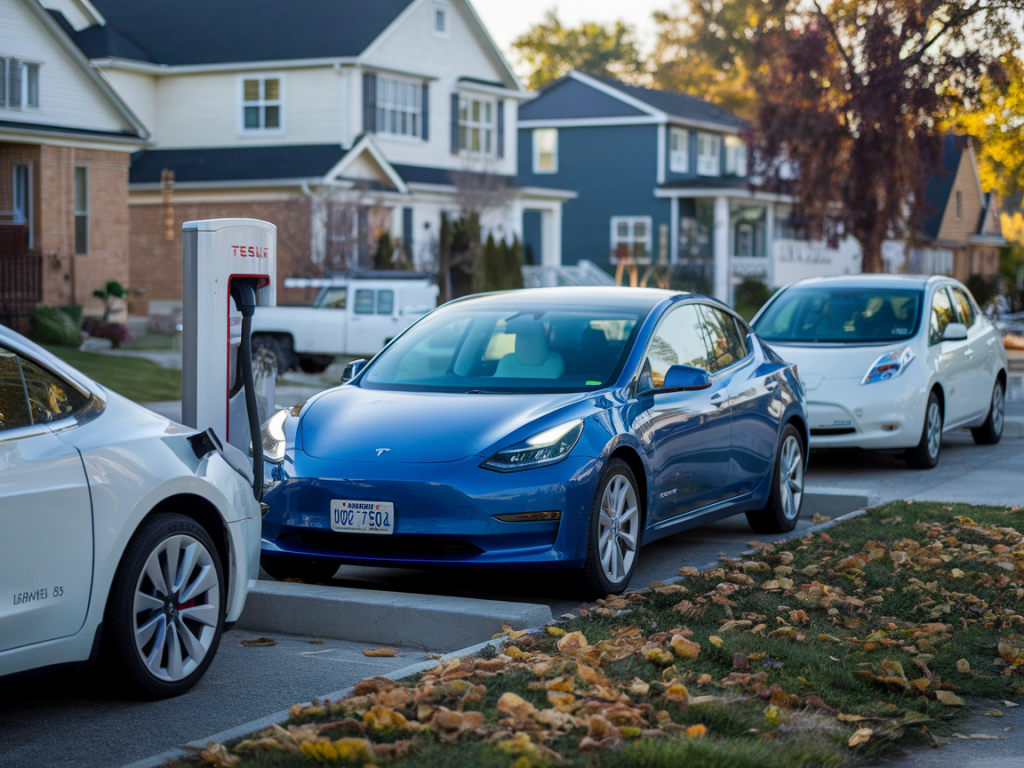
I keep hearing the same surprise from readers and friends who just bought electric cars in the suburbs: “I thought the federal grants would solve the charger shortage — why is my town still running out?” I’ve been covering technology and policy long enough to know that money alone rarely cures a complex infrastructure problem. The recent federal grants for electric vehicle (EV) charging are necessary, but they’re only one piece of a much larger puzzle that includes grid capacity, local politics, permitting, economics for installers, and the realities of suburban housing stock.
Grants are helpful — but they don’t build chargers overnight
The federal money most people refer to comes from programs tied to the Bipartisan Infrastructure Law and the Inflation Reduction Act, including the National Electric Vehicle Infrastructure (NEVI) Formula Program and other state-level competitive grants. These funds are substantial and directional: they set priorities and underwrite projects that might not otherwise be viable.
Yet grants require planning, application, contracting, and oversight. That means several months — often a year or more — just to turn a grant announcement into a shovel in the ground. States and municipalities need to design projects that comply with federal rules, secure matching funds in some cases, and coordinate with utilities. Meanwhile, companies like ChargePoint, Electrify America, Blink, and EVgo that install public chargers still face lead times for hardware and installation crews. So even with funding, there’s a lag before chargers appear in suburban neighborhoods.
Permitting and local politics slow things down
One of the most common bottlenecks I see is the local permitting process. Suburban governments often rely on small planning and building departments that don’t have established procedures for fast-tracking EV charger installations. Each charger can require electrical permits, site plan changes, signage approvals, and sometimes neighborhood meetings.
I’ve attended local hearings where residents expressed concerns about curbside parking, aesthetic impacts, or the fear that clusters of chargers will increase traffic. Those debates are legitimate and often necessary, but they add time. Until municipalities standardize permitting and adopt clear zoning allowances for charging stations, rollout speed will vary wildly from town to town.
Grid constraints and utility coordination
Installing a fast charger isn’t like plugging in a new streetlight. Fast DC chargers can demand hundreds of kilowatts, and adding several chargers to a suburban strip mall or a church parking lot may require significant electrical upgrades: new transformers, higher-capacity lines, and in some cases even substation work. That means coordination with utilities and, sometimes, long lead times for grid upgrades.
Utilities are often willing to help, but the work is capital-intensive and requires load studies, permits, and engineering. In places with older distribution infrastructure, the cost and time for upgrades can dwarf the grant money available for the chargers themselves. Until grant programs account for and prioritize funding for grid upgrades, local projects can stall.
Installer and labor shortages are real
There’s also a human capital problem. The ecosystem of electricians, civil contractors, and EV-specific installers hasn’t scaled at the same pace as car sales or federal grants. Training programs and certified technicians are growing, but demand currently outstrips supply. I’ve spoken with small electrical contractors who are booked months in advance and major vendors reporting backlogs for parts and installation crews.
Workforce shortages raise costs and extend timelines. A suburban municipality might approve a project in June, but the company awarded the contract won’t start physical work until crews are available in October. That scheduling mismatch is a simple but persistent reason chargers aren’t appearing as quickly as people hoped.
Economics and the missing business case
From a private landowner’s perspective, installing chargers is not obviously profitable. Fast chargers cost significantly more than Level 2 units, require ongoing maintenance, and may sit idle for long periods depending on location. For a suburban retailer or a condo association, the return on investment is uncertain.
That’s why grants often target highways, commercial corridors, or transit hubs where usage is expected to be higher. Suburban curbside and neighborhood installations — the ones that would most directly help residents without garages or renters — are harder to finance because usage patterns are less predictable. Until business models evolve (for instance through utility-owned charging, subscription models, or stronger incentives for landlords), private deployment in suburban residential areas will lag.
Housing and ownership patterns complicate home charging
Home charging is the simplest solution for many EV owners, but it’s not a viable option for everyone. In many suburbs, people live in single-family homes with garages and can install a Level 2 charger easily. But increasing numbers of suburban residents are renters, live in duplexes, or occupy multifamily homes where individual parking and electrical access are limited. Property owners and homeowners associations may resist installations, or owners may not want to shoulder the cost of rewiring.
I’ve sat with condo residents who can’t get a clear answer from their board about whether chargers are allowed, and with landlords who don’t want to modify parking lots for a tenant’s car. Solving that problem requires legal clarity, incentives for property owners, and programs that make shared or managed charging economically feasible.
Supply chain issues still matter
Hardware shortages — not just of chargers but of transformers, power electronics, and even construction materials — have affected timelines. Companies occasionally run into delayed shipments, regulatory changes that require new certifications, or firmware compatibility issues that push back installations. That’s less visible to the public than grid upgrades, but it’s a real constraint for vendors under contract.
What helps speed deployment — concrete fixes I’ve seen work
From reporting across states and conversations with local officials, utilities, and vendors, several practical approaches help:
- Streamlined permitting: Creating clear, expedited permit paths for chargers — modeled on building code checklists — reduces weeks or months of delay.
- Utility-led programs: When utilities offer turnkey charging programs (including grid upgrades), rollout is faster because the utility coordinates power upgrades and can finance infrastructure against rate-base or special programs.
- Workforce training and certification: Investment in training electricians for EV-specific installations cuts bottlenecks. Apprenticeship and short-course programs have quick payoffs.
- Incentives for property owners: Grants or tax credits targeted at landlords and condo associations to install shared chargers can unlock large swathes of curbside and parking-lot charging.
- Flexible funding that covers grid upgrades: Grant programs that explicitly pay for transformers, undergrounding lines, or utility interconnection fees avoid projects stalling for lack of funds.
What I advise suburban EV owners facing shortages
If you’re an EV owner struggling to find chargers near home, here are pragmatic steps I recommend based on what I’ve seen work:
- Talk to your landlord or HOA about shared charging options; suggest pilot programs with cost-sharing.
- Push your municipality to adopt expedited EV permitting and designate priority sites.
- Contact your utility to learn about pilot programs, managed charging incentives, and potential grid upgrade timelines.
- Use apps (PlugShare, ChargePoint, Tesla’s map) to identify lesser-known Level 2 spots and off-peak windows for fast chargers.
- Organize neighbors to show demand — pooled applications for community chargers can make projects financially viable.
Grants are a crucial step, but they’re not a magic wand. The messy middle — permits, grid upgrades, labor, landlord decisions, and local politics — is where progress will be won or lost. I’ll keep tracking the rollout and reporting on the practical fixes that move the needle; in the meantime, community pressure and coordinated local action often accelerate projects more than waiting for a single funding announcement to do all the work.