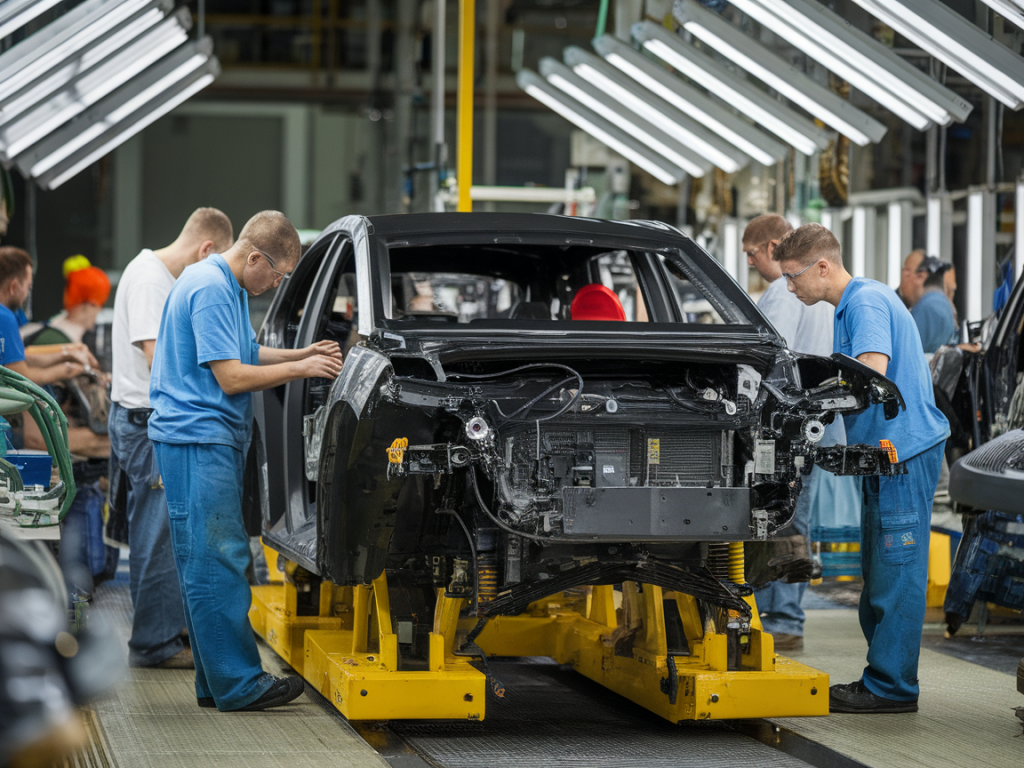
Why the latest chip shortage matters for electric vehicle delivery timelines

Why the latest chip shortage matters for electric vehicle delivery timelines

I’ve been tracking the semiconductor bottlenecks for years, but the latest wave of shortages feels different — and it matters for anyone waiting on an electric vehicle (EV). When customers ask me whether their pre-ordered EV will arrive on time, the short answer I give now is: it depends — on the chips, the carmaker’s supply strategy, and a string of interlinked parts and software dependencies that rarely make headlines. Here’s what I’ve learned, and what I wish more people understood about why semiconductor shortages ripple directly into EV delivery timelines.

Which chips matter for EVs — and why they’re not all the same

When most people hear “chip shortage,” they think of one tiny component. The reality: modern cars, especially EVs, contain hundreds of different semiconductor types. Some are common to internal-combustion cars; others are highly specific to electric powertrains, battery management, and advanced driver-assistance systems (ADAS).

Here are the categories that most affect EV deliveries:

  • Battery management ICs — these regulate charge, monitor cell health, and are crucial for safety. Shortages here can force production delays or even prevent manufacturing lines from finishing cars.
  • Power semiconductors (IGBTs, MOSFETs) — these handle high-voltage switching in inverters and motor controllers. They’re specialized and often sourced from a smaller set of suppliers.
  • Microcontrollers (MCUs) and system-on-chips (SoCs) — used for infotainment, ADAS, and body control. High-end SoCs (like NVIDIA, Ambarella, or Qualcomm chips) are in high demand across industries.
  • Memory chips — needed for navigation maps, firmware, and the edge AI that runs driver assists.
  • Discrete analog and logic chips — seemingly mundane parts for sensors and power distribution; often overlooked but critical.
  • Shortage pressure on any one of these categories can stall production. For example, Tesla’s ability to fast-track over-the-air updates depends on SoCs and memory; an automaker may build the vehicle chassis but can’t deliver it without the final electronic units installed and tested.

    How the shortage translates into delivery delays

    There are several mechanisms by which chip scarcity delays deliveries:

  • Line stoppages: If a plant runs out of a critical chip, they may halt the entire line rather than ship incomplete vehicles. That’s common if the missing part is integral to battery safety or drive control.
  • Deferred installations: Some manufacturers will ship vehicles with placeholder hardware or “software-disabled” features, then enable them later via an update or retrofit — but that’s not always feasible for high-voltage components.
  • Prioritization decisions: Automakers with deeper pockets or better supplier relationships (think Toyota, Volkswagen) can secure allocations ahead of niche brands, so smaller EV startups are often the first to be hit with delays.
  • Logistics and testing backlog: Even when chips arrive, limited testing stations and engineers can create bottlenecks; integrating an updated chip often requires validation cycles and firmware tweaks.
  • In practice this means a customer waiting for a Polestar 2, a Rivian R1S, or an EV from a legacy maker like Ford or GM could see timelines slip by weeks or months — depending largely on which chips are in short supply and how flexible the manufacturer is in redesigning around alternatives.

    Real-world examples and brand strategies

    We’ve seen concrete cases where automakers either chose to pause shipments or alter specs. For example:

  • Some manufacturers paused production of specific trims that used premium ADAS packages, while continuing to build lower-spec versions.
  • Toyota famously decoupled its chip sourcing early and kept some plants running by redesigning control units to use more widely available parts.
  • Startups like Lucid and Fisker have reported component shortages that directly slowed delivery targets — they’re often less able to exert buying power or absorb redesign costs.
  • On the flip side, companies that invested early in long-term contracts with chipmakers, or that designed modular architectures allowing alternative suppliers, have fared better. That’s why brand reputation for on-time delivery increasingly hinges on procurement strategy as much as on factory efficiency.

    What automakers can — and can’t — do to fix it quickly

    There’s a misconception that automakers can simply “order more chips.” Many are bound by lead times, foundry capacities, and the economics of chip design. Here’s what they can realistically pursue:

  • Design flexibility: Re-architect systems to accept different chip families, though that requires validation, firmware updates, and often regulatory sign-off.
  • Supply diversification: Lock in multiple suppliers for the same component, spreading risk — but that’s expensive and not always possible for cutting-edge power semiconductors.
  • Strategic stockpiling: Maintain buffers of critical parts. This helps, but increases working capital needs and can exacerbate shortages by hoarding.
  • Software-first mitigations: Where possible, decouple feature activation from hardware delivery through software toggles. This helps with infotainment and ADAS features, less so with powertrain chips.
  • They can’t, however, conjure additional foundry capacity overnight. Building new semiconductor fabs takes years and billions of dollars — hence why national policy and long-term investment matter.

    What buyers should consider now

    If you’re waiting for an EV, here’s what I’d advise based on conversations with industry insiders and my own reporting:

  • Ask for specifics: When you preorder or reserve, ask the dealer or manufacturer which components are in short supply and whether your delivery is contingent on them.
  • Be flexible on trim: If your order includes optional ADAS or premium battery packs, consider switching to a base trim if you need a car sooner.
  • Watch for software delivery updates: Some features may be shipped later as software activations — make sure you understand the timeline for those activations and any associated costs.
  • Consider brand buying power: Larger, vertically integrated manufacturers tend to weather shortages better. Startups are exciting but may face more delivery risk.
  • Policy and the longer-term picture

    From where I sit, the chip shortage underlines a broader structural challenge: the global semiconductor supply chain is a strategic asset that intersects technology, trade policy, and national security. Governments in the U.S., EU, Japan, and elsewhere are pouring money into new fabs and incentivizing onshore production, but results will take years to materialize.

    In the near term, the industry will lean on three stopgaps: design modularity, stronger supplier partnerships, and prioritizing safety-critical components. As a buyer, that means being prepared for staggered feature delivery, occasional delays, and a landscape where brands that invested in resilient supply chains are more likely to honor promised timelines.

    I’ll keep tracking how specific chip categories and supplier moves affect EV rollouts, and I’ll update readers at Thepostview when there are signs of real improvement or fresh disruptions. In the meantime, if you’ve been told your EV delivery is delayed, look at the part-level reasons — that will tell you whether the delay is temporary and likely to be resolved quickly, or whether it’s part of a deeper supply-chain reconfiguration that could push timelines further out.


    You should also check the following news:

    Politics

    What a withdrawal of federal science funding would mean for university research labs

    02/12/2025

    I still remember the day a senior postdoc at my university walked into my office with a stack of grant rejection emails and a look that mixed...

    Read more...
    What a withdrawal of federal science funding would mean for university research labs
    Politics

    How governments quietly use tax incentives to steer tech investment into surveillance industries

    02/12/2025

    When I first started digging into public budgets and corporate filings, I expected to find the usual incentives: tax credits for clean energy,...

    Read more...
    How governments quietly use tax incentives to steer tech investment into surveillance industries