I first noticed the shift last year when a friend in her final semester told me she never met the recruiter who invited her to a technical interview. A short message asked her to complete an online assessment, then an automated scheduling link appeared, and within days she had an offer. It felt efficient — until she described how the assessment had flagged a perfectly reasonable answer as “low confidence.” That flag carried weight downstream.
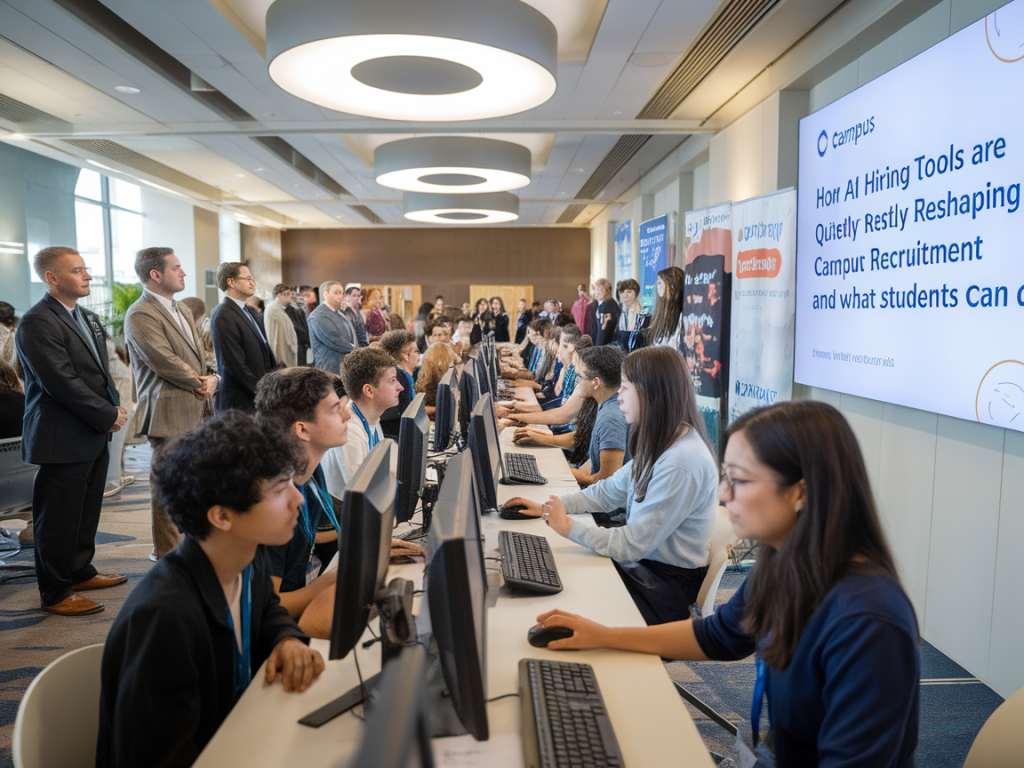
Campus recruiting has always been a mix of ritual and hustle: career fairs, résumé drops, coffee chats, coding competitions, on-campus interviews. But quietly and quickly, companies are layering artificial intelligence across that pipeline. From automated résumé screeners to video-interview analysis to algorithmic matching platforms, AI tools are changing who gets noticed, how decisions are made, and what students need to do to land roles.
What’s changed: the tools recruiters actually use
It helps to map the practical tools I see in the market.
Automated résumé screeners — Vendors like HireVue, Eightfold.ai, and Pymetrics (and many ATS systems) use machine learning to rank applicants against job descriptions. They look for keywords, inferred skills, and sometimes predict cultural fit.Online assessments and coding platforms — HackerRank, Codility, and LeetCode’s enterprise offerings are common gatekeepers for technical roles. These platforms turn problem-solving into scored modules that can be automatically filtered.Video interview analytics — Some firms deploy AI to analyze recorded video responses for facial expressions, voice cadence, and language to generate compatibility scores. HireVue popularized this approach, though it’s controversial.Matching and sourcing platforms — Tools like LinkedIn Talent Solutions and Handshake increasingly use recommendation engines to suggest candidates to recruiters, shaping whose profiles get visibility.None of these tools are inherently malicious. Many recruiters say they help scale outreach and reduce bias by focusing on objective signals. But the reality is more complicated: algorithms reflect the data and human choices they’re built on.
Why this matters for campus recruitment
Campus recruiting historically leveled certain barriers: a strong campus presence, faculty recommendations, and in-person events gave students a chance to demonstrate potential beyond CV keywords. AI changes the early-stage signals that matter.
First impressions are digital and quantifiable. A résumé parsed by an ATS may be reduced to a matching score. Automated coding tests become a binary pass/fail for many roles. That means small differences — a missing keyword or an unfamiliar project label — can disproportionately affect outcomes.Scale reduces serendipity. Recruiters can process thousands more candidates thanks to automation, which sounds good, but it also means fewer candidates get deep, human attention. Students who might shine in conversation risk being lost if their early signals don’t rank highly.Bias can be encoded. If a company trains models on historical hires that skew toward certain universities, majors, or demographics, the algorithm will replicate those patterns unless explicitly corrected.New skills get prioritized. Data literacy, ability to write clear project descriptions, and familiarity with take-home assessments are suddenly as important as classroom performance.Practical advice for students navigating the new landscape
I often tell students that the technical change here is less important than the practical one: you need to present signal in ways algorithms recognize, without losing the human story behind your application. Here are concrete steps you can take.
Optimize your résumé for both humans and machines. Use clear section headings (Education, Experience, Projects, Skills). Mirror language from job postings for relevant roles — but only when truthful. Include measurable outcomes: “Reduced API response time by 30%” or “Led a 5-person team for 6 months.” Avoid dense paragraphs; bots prefer simple, labeled data.Make projects discoverable. Host code on GitHub with README files, link to live demos, and use descriptive repository names. For non-code work, create a concise portfolio page. Many sourcing tools scrape public profiles, so keep them up to date.Practice standardized assessments. If you’re applying for technical roles, spend time on platforms like LeetCode and HackerRank. Familiarity reduces stress and improves scores. For case or psychometric-style assessments, sites like Pymetrics offer practice modes.Record practice video responses. Even if a company doesn’t use video analytics, recorded interview questions are becoming common. Focus on clear structure: Situation, Task, Action, Result. Speak succinctly and avoid industry jargon unless necessary.Use your network strategically. An internal referral still cuts through algorithmic noise. Build relationships with alumni, professors, and recruiters. Ask for feedback on how best to label projects or describe experiences when submitting through an ATS.Be transparent about accommodations. If you have a disability or neurodivergent profile, companies are increasingly required to provide reasonable accommodations. Ask for alternative assessment formats if video analytics or timed coding platforms are barriers.Document learning and growth. Algorithms reward activity. Contributing to open-source, completing verified online courses (Coursera, edX, or vendor certifications), and writing short posts about what you learned can increase your discoverability.How to spot when AI is being used — and what to ask
Students often don’t know whether an employer uses AI-based filtering. Don’t be shy about asking recruiters directly. Here are questions that are fair and useful:
“Do you use automated résumé screening or assessment platforms in your early process?”“If assessments are used, can you provide details and practice resources?”“How do you ensure your tools don’t encode bias against certain schools or backgrounds?”“Are there alternative evaluation methods if I prefer not to do recorded video interviews?”Legitimate recruiters will answer these questions or point you to policy. If the response is evasive, that’s a signal worth noting.
What universities and career centers should do
I’ve talked with career services leaders who are retooling their advice. Universities can help level the field by:
Teaching digital literacy for hiring — Workshops on ATS-friendly résumés, coding assessments, and how to build a public portfolio.Partnering with platforms — Negotiate student access to practice assessments or anonymized feedback from vendors.Collecting placement data — Track which tools employers use and which students succeed, to refine guidance.Simple changes — like a template for project READMEs or an internal mock-assessment day — can make a disproportionate difference for students from under-resourced backgrounds.
Final notes from the field
Technology is reshaping recruitment, but students are not powerless. The new rules favor clarity, measurable signals, and intentional presentation. Learn the mechanics of the tools you’ll face, craft your materials to communicate both to machines and people, and use networks to create human touchpoints. Employers will keep experimenting; the smartest candidates will adapt by being both technically prepared and narratively compelling.
When I mentor students now, I focus less on generic advice and more on practical audits: Is your GitHub readable? Does your résumé speak the recruiter’s language? Could a bot miss your leadership work because it’s described in vague terms? Small, targeted fixes often open doors that algorithms would otherwise keep closed.