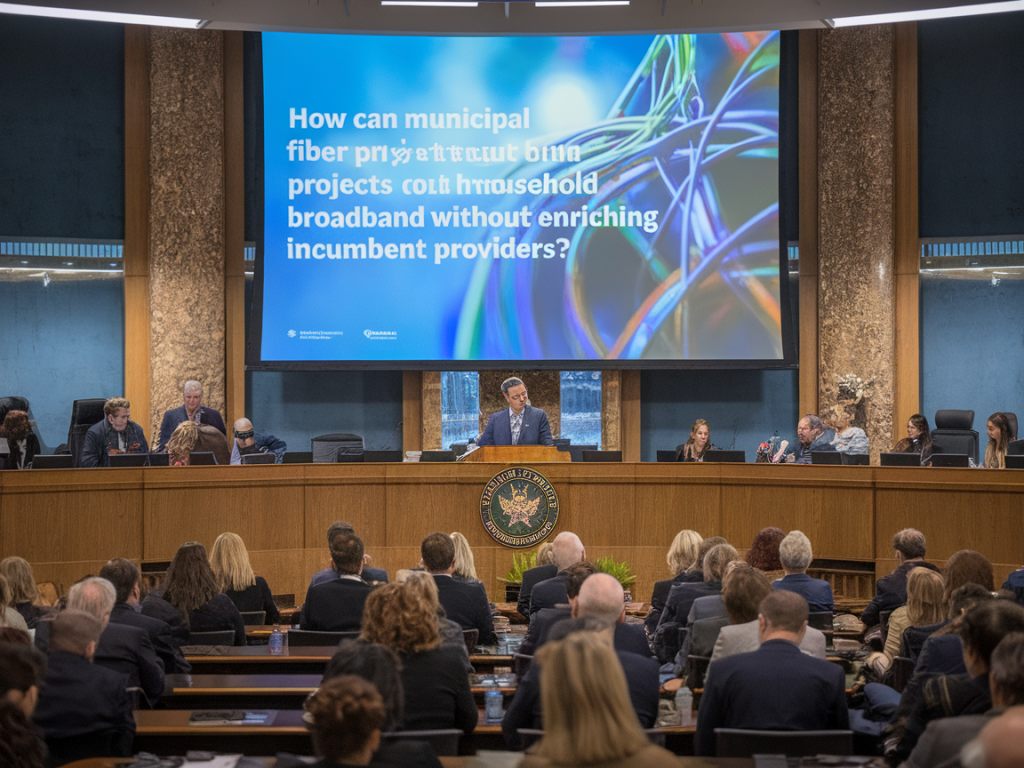
When I look at municipal fiber projects, I see a clear promise: faster, more reliable internet at lower cost for households. But I also see a recurring pitfall — too often the financing and contracting structures of these projects end up padding the profits of incumbent providers or their partners instead of delivering sustained savings for residents. I’ve followed enough local debates and watched policy experiments across the U.S. and Europe to know that municipalities can cut household broadband bills without enriching dominant ISPs — if they design networks and rules intentionally.
Why municipal fiber can lower bills — and why it sometimes doesn’t
At their best, municipal fiber projects reduce costs through competition, by removing middlemen, and by using public financing to spread infrastructure costs across many users. Examples like Chattanooga’s EPB and Lafayette’s LUS Fiber show that locally owned fiber can produce lower prices, higher speeds, and better customer service.
But there are also cautionary tales: projects that signed long-term contracts guaranteeing returns to private partners, or that limited competition by leasing capacity to incumbents on favorable terms, effectively redirected public value into private pockets. UTOPIA in Utah struggled with adoption and debt service partly because of governance and marketing failures. The takeaway: structure matters.
Core principles to avoid enriching incumbents
- Prioritize wholesale, open-access models: If the municipality builds the fiber and operates it as a wholesale neutral network, multiple retail providers can compete on service and price. That reduces the ability of any single incumbent to capture windfall profits simply by being the first to sign a resale deal.
- Keep retail and infrastructure separate: Vertical integration — where the municipal utility or a private partner both owns the fiber and provides retail service — can be fine, but it must not be the only option. Separate accounting, non-discriminatory access, and strict rules on related-party transactions prevent favoritism.
- Design contracts to limit guaranteed returns: Avoid agreements that guarantee a minimum revenue to private firms or cap competition. Public financing should not be a subsidy to incumbents masked as “partnership” payments.
- Set transparent, capped wholesale rates: Municipalities should publish wholesale pricing methodologies and cap markups to prevent reseller rent-seeking.
- Include affordability conditions: Require baseline low-cost plans for low-income households, funded by cross-subsidies or targeted grants, rather than forcing residents to rely on incumbent discount programs that often have hidden eligibility hurdles.
Practical policy tools that work
Here are the specific levers I’d push for if I were advising a city leader or a local advocacy group:
- Open-access wholesale networks: Build a neutral fiber network and sell capacity at wholesale prices to any qualifying ISPs. Ammon, Idaho’s model — where the city owns the fiber and residents choose from competing retail ISPs — is a strong example of how choice keeps prices down.
- Transparent procurement with performance-based contracts: When outsourcing construction or operations, tie payments to milestones and customer metrics (uptake rates, latency, maintenance response). Avoid “take-or-pay” concessions that guarantee revenue regardless of performance.
- Use municipal financing responsibly: Long-term muni bonds or low-interest loans can lower capital costs. But bonds should be sized conservatively, and repayment schedules should be based on realistic adoption forecasts to avoid backstopping private profits.
- Pole and right-of-way policies: Streamline access to poles and conduits and enforce fair compensation. Removing unnecessary fees lowers deployment costs and translates into lower tariffs for customers.
- Dig-once and coordinated infrastructure upgrades: Require fiber deployment during roadworks and utility projects to cut civil costs. That reduces per-household build cost and gives public negotiators more leverage.
- Public-interest clauses in any partnership: Require local hiring commitments, caps on executive pay related to the project, and reinvestment clauses that direct a portion of surplus to affordability programs or network upgrades.
- Transparent accounting and community oversight: Publish audited financials and create a citizen advisory board so decisions about rates and investment are visible and accountable.
Models compared: who keeps what
| Model | Who owns the fiber | Who provides retail service | Risk of enriching incumbents | Typical household bill impact |
|---|---|---|---|---|
| Municipal utility (retail + infra) | City | City-operated ISP | Low if competitive retail options exist; higher if exclusive | Often lower due to non-profit motive |
| Open-access wholesale | City | Multiple ISPs | Low — incumbents must compete for customers | Lower, with choice driving prices |
| Public-private partnership (revenue share) | Shared | Private partner or incumbents | High if contracts include guaranteed returns | Mixed — can be neutral or increase costs |
| Private incumbent build | Incumbent | Incumbent | Very high | Often unchanged or higher |
Examples and lessons
Chattanooga’s EPB invested in fiber and kept the utility structure public; that allowed aggressive pricing and innovative offers (like gigabit plans at affordable rates) without bending to shareholder pressure. Lafayette’s LUS Fiber has similar lessons: local control plus transparent reinvestment improved service and kept prices competitive.
Contrast that with some PPPs where legacy cable or telco firms negotiated revenue guarantees and exclusive service windows. Those deals can look appealing to cash-strapped cities in the short term, but they often produce limited competition and higher long-term bills. Google Fiber’s selective market entries also show that private entry alone won’t necessarily serve affordability goals — without a competitive ecosystem and municipal leverage, private players can cherry-pick profitable neighborhoods and leave others behind.
What I tell mayors and advocates
I tell them to start with clear objectives: lower bills, universal access, and local control. Then build procurement, financing, and governance to match those goals. Demand open access or strong public-interest protections if you partner with private firms. Use financing tools — bonds, federal grants, ARPA funds — to reduce capital costs, but don’t let financing be a conduit for transferring excess returns to incumbents.
Finally, measure success not by ribbon-cutting ceremonies, but by adoption, price trends, and customer satisfaction. Insist on published KPIs and price tracking to make sure that the promise of cheaper, better broadband becomes reality for households — not a one-time photo op that enriches a well-connected company.
Practical steps residents can push for
- Ask your city council for an open-access feasibility study and insist on public review of any PPP contracts.
- Demand transparent wholesale pricing and caps on reseller markups.
- Support municipal bonds only if clear adoption scenarios and safeguards are in place.
- Advocate for low-income, no-fuss plans as part of the network’s baseline offerings.
- Encourage local hiring and small-business participation clauses so benefits stay in the community.
Municipal fiber projects have real potential to cut household broadband bills — but only if cities design them to serve the public interest rather than to provide windfalls to incumbents. I’ve seen it work when communities insist on open access, transparent contracts, and accountable governance. The rest is about details, and the details are where policy wins or loses.