Homework in French schools is a topic that often surprises parents and students from other countries. The system is shaped by a mix of national rules, classroom habits, and long-standing academic traditions. While homework exists in France at all levels of schooling, the way it is assigned, completed, and evaluated is not always the same as in English-speaking systems. Understanding how it works can help families support children more effectively, whether they are enrolled in a public school, a private school, or are preparing to move into the French education system.
The role of homework in the French education system
In France, homework is usually seen as a way to reinforce what students have already learned in class. Teachers often use it to help pupils review grammar, memorize vocabulary, practice arithmetic, or prepare for tests. The main idea is not simply to keep children busy after school, but to help them build discipline and long-term academic habits.
The French school system is highly structured, and homework is part of that structure. Students are expected to become increasingly independent as they move through the grades. In the early years, homework is lighter and more focused on reading, memorization, or short exercises. Later, assignments become longer and more demanding, especially in middle school and high school.
Homework also reflects a cultural belief in effort and rigor. French education traditionally values repetition, precision, and mastery of core knowledge. As a result, assignments may be short in some cases, but they are often carefully designed to strengthen specific skills. Even when a student only has a few exercises to complete, those exercises may be meant to consolidate an entire lesson.
What homework looks like at different school levels
The amount and type of homework in French schools depends strongly on the student’s age. In preschool and the first years of elementary school, children may not receive formal homework in the same way older students do. Teachers may ask them to read, memorize a poem, or review a lesson with their parents, but written homework is often limited.
In primary school, homework usually includes reading aloud, learning spelling words, practicing basic math, and reviewing class material. Some teachers may assign short written exercises, but there are rules about how much homework young children should receive. The goal at this stage is to help them form good habits without creating overload.
In middle school, homework becomes more regular. Students may have exercises in mathematics, language practice, history preparation, science review, and reading assignments. They are also expected to manage several subjects at once, which means they must learn to organize their time. French middle school students often use a homework notebook or digital platform to keep track of assignments.
In high school, homework can become quite demanding. Students may have essays, research, problem sets, oral presentations, reading tasks, and revision for exams. In the final years before the baccalauréat, homework is often closely linked to exam preparation. Students may spend several hours each evening studying, especially when they have multiple major subjects.
Rules and expectations around homework
French schools have an interesting relationship with homework, especially in the early grades. In many cases, written homework for younger children is discouraged or restricted. The idea is that all students should have equal access to learning, and that too much work at home may disadvantage children whose families cannot provide as much help.
That said, teachers may still assign activities to do at home. Reading, memorizing, and revising are common examples. In practice, many families also choose to do extra practice with their children, particularly in reading or mathematics. The amount of support varies widely from one household to another.
As students get older, expectations become clearer. They are supposed to complete their assignments on time, bring the right materials, and manage longer projects independently. Teachers may not always check every single homework task in detail, but they do expect students to be prepared. In French schools, being organized is part of academic success.
For families who are new to the system, it can be useful to understand the environment better by exploring resources such as french school. Knowing how the school day is organized and what teachers expect can make homework routines easier at home.
How homework is assigned
Homework in France can be assigned in several ways. Traditionally, teachers write tasks on the board or dictate them at the end of class. Today, many schools also use digital tools and online platforms where students can find instructions, documents, and deadlines. In some schools, especially at the secondary level, students may be expected to check an online school portal every day.
Assignments may be given for the next day, for later in the week, or as part of a longer project. A teacher might ask students to read a chapter, answer questions, solve exercises, prepare a presentation, or study vocabulary. In some subjects, homework is used to support continuous learning; in others, it prepares students for an upcoming assessment.
Students are usually responsible for writing down their homework carefully. Teachers often assume that children will remember to copy everything correctly. This is one reason why many French schools encourage students to use a cahier de textes, which is a homework notebook or planner. In some schools, digital planners have replaced paper notebooks, but the principle remains the same: students must learn to track their own work.
What parents usually do at home
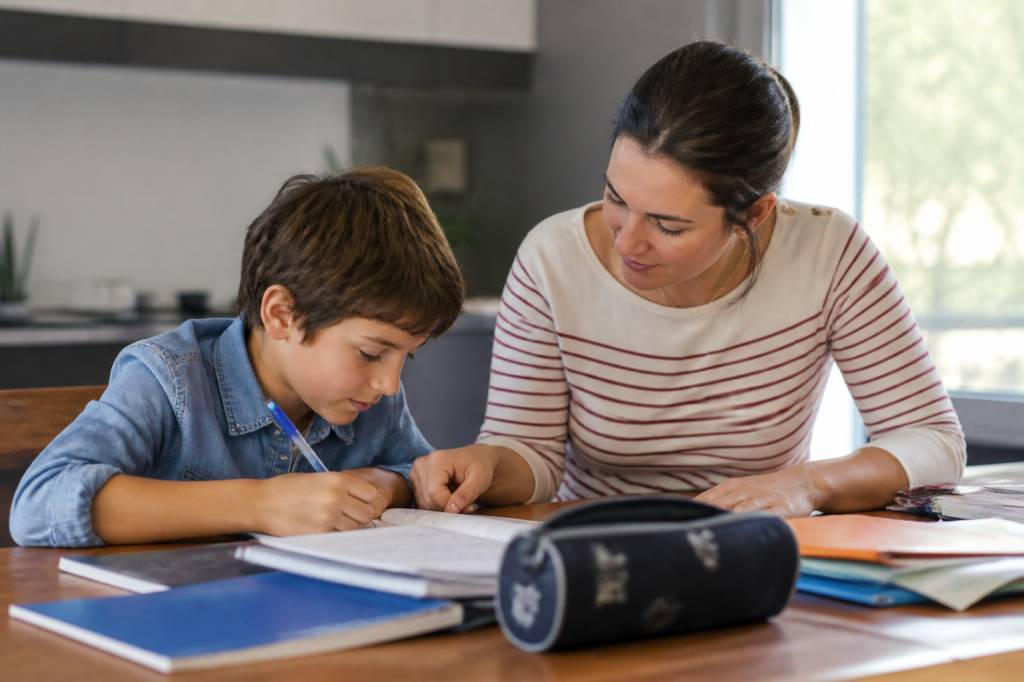
Parents in France often play a support role, especially when children are young. They may listen to reading practice, check that homework is finished, or help review lessons before a test. However, the amount of direct help expected from parents is generally limited compared with some other systems. Teachers often want to see the student’s own work rather than a heavily assisted version.
This can create a challenge for families who are accustomed to sitting with children for long periods to complete homework together. In the French system, independence is highly valued. Parents are usually encouraged to make sure the child has a quiet place to study, a stable routine, and the right materials, but not to do the work for them.
That said, there is some variation. In early primary school, parents may need to explain instructions, help with reading, or supervise memorization. In middle school, they may check that homework is completed and help children prepare a schedule. In high school, the main role of parents is often to provide support, organization, and encouragement rather than direct academic intervention.
Typical subjects and common homework tasks
Homework in French schools often reflects the importance of core academic subjects. Some of the most common tasks include:
- Reading a text aloud or silently and answering questions
- Learning vocabulary or spelling words
- Memorizing a poem, definition, or historical date
- Doing arithmetic or algebra exercises
- Writing short paragraphs, essays, or summaries
- Reviewing grammar rules and conjugations
- Preparing an oral presentation
- Studying maps, charts, or scientific diagrams
In language classes, students may be asked to translate, revise grammar, or memorize irregular verbs. In mathematics, homework often involves repeated exercises to build speed and accuracy. In history and geography, students may learn key facts, dates, and concepts. In science, they may complete observations, answer questions, or review diagrams and definitions.
At higher levels, homework can also include more analytical work. Students may be asked to compare texts, explain arguments, interpret documents, or write structured essays. French education places a strong emphasis on clear reasoning and careful expression, so homework is often designed to develop those skills.
Homework and school rhythm in France
The rhythm of the school day and school week also affects homework. French students generally have a full academic schedule, and many attend school for a large part of the day. This means that homework is often done in the evening after classes, extracurricular activities, and family time.
Because the school day can be long, homework must fit into a limited window. Students need to learn how to prioritize tasks and avoid procrastination. This is particularly important in middle school and high school, where several subjects may assign work at the same time.
Weekly routines can also differ from other countries. In some parts of France, the school week may include fewer full classroom days, which can affect how homework is planned. Students may receive tasks to complete over the weekend or during a midweek break. Teachers try to balance the need for practice with the fact that children also need rest and family time.
Homework load and debates in France
Homework is not without debate in France. Some educators argue that it is essential for learning, while others believe that too much homework can create stress and inequality. The debate is especially strong in the early years of schooling, where children’s home environments differ widely.
One common concern is fairness. Not every child has the same level of parental support, a quiet workspace, or access to books and digital devices. If too much work is assigned for home, students from more advantaged families may have an easier time succeeding. This is one reason why some teachers prefer to keep homework limited in primary school.
Another concern is fatigue. French students already spend many hours in class, and some families feel that the burden of homework can reduce time for sports, music, reading for pleasure, or simply relaxing. Educators continue to debate the right balance between practice and overload.
Despite these discussions, homework remains a normal part of school life. Most teachers see it as a useful tool when used carefully and purposefully. The emphasis is often on quality rather than quantity, especially when assignments are clear, specific, and aligned with classroom learning.
How students can succeed with homework
Students in French schools often do best when they establish a steady routine. Since homework may be assigned regularly, it helps to set aside the same time each day for study. A quiet environment, a tidy desk, and all necessary materials can make a big difference.
It is also useful for students to review lessons a little each day instead of waiting until the last minute. French education tends to reward regular effort. Memorizing vocabulary in small sections, practicing math little by little, and reviewing notes after class can reduce stress before tests.
Here are a few habits that often help:
- Write homework down carefully every day
- Start with the most difficult subject first
- Break longer tasks into smaller parts
- Review lessons soon after class
- Ask questions when instructions are unclear
- Keep notebooks, books, and supplies organized
Students should also learn how to ask for help in a productive way. In the French school system, it is important to show initiative. If a student does not understand an assignment, it is better to ask the teacher early than to guess. This habit becomes even more important in secondary school, where missing one assignment can affect preparation for future lessons.
Differences for international families
Families moving into France from abroad often notice that homework is handled differently. In some countries, children may receive extensive homework from a very young age. In France, the approach can feel more formal in some subjects and more restrained in others. There is often a stronger focus on academic precision, while direct family involvement may be less central than expected.
International parents may also find that French school communication is concise. Teachers may expect students to understand instructions on their own. If a child is new to the system, parents may need time to adapt to the style of organization and the level of independence expected.
Language can also be a barrier. Children learning French as a second language may need additional support, especially with reading comprehension, vocabulary, and written instructions. In that case, homework may take longer, not because the work is harder academically, but because the language itself requires extra effort. Patience and repetition are often very helpful.
Over time, most students adapt well. Once they understand how assignments are given and what teachers value, they usually develop a strong routine. The French homework system rewards consistency, careful reading, and steady practice. For many children, it becomes a normal part of growing up in school.
Understanding homework in French schools means understanding the larger culture of education in France. It is a system that values structure, effort, and academic rigor, while also trying to balance independence with support. For families, learning how this rhythm works can make daily life smoother and help students gain confidence in their studies.