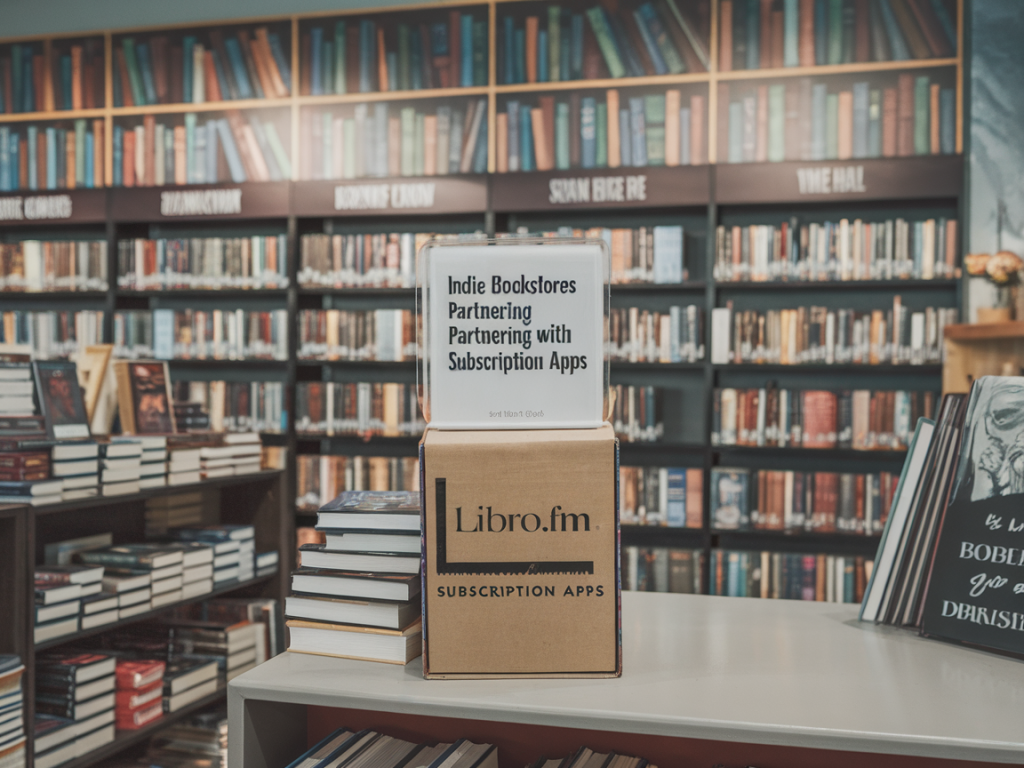
I still remember the smell of the independent bookstore where I learned to browse: paper, coffee, a smattering of handwritten recommendations. Those stores taught me how to discover books by touch and conversation, not by an algorithm's top picks. Lately, though, I’ve watched many of those shops shrink their footprints on the cultural map as discoverability on major platforms becomes dominated by a handful of recommendation engines.
That’s why the recent trend of indie bookstores partnering with subscription apps like Libro.fm feels important — and stealthy. It’s not just a new revenue stream. It’s a strategy to reclaim discoverability, to create a counterweight to algorithm-driven discovery loss, and to reinsert local and human curation into a global marketplace.
What do we mean by "algorithm-driven discovery loss"?
When people talk about algorithm-driven discovery loss, they mean something specific: the gradual disappearance of serendipitous, human-led discovery as opaque recommendation engines and curated lists prioritize a smaller set of titles. Big platforms — from Amazon to Spotify-style models — optimize for engagement and conversion, which can push midlist or regional authors off the radar. Over time, readers get funneled into a narrower set of popular choices. The diversity of books you used to stumble across in a shop window or on a clerk’s shelf starts to fade online.
For independent bookstores, that’s existential. Their value proposition has always been expert curation, local taste, and discovery by conversation. When algorithms prioritize scale and the same handful of titles for millions of users, indie shops lose a key part of their differentiated offering.
Why apps like Libro.fm matter to indies
I’ve spent time talking with bookstore owners and browsing the way readers talk about audio subscriptions. Two things stood out. First, Libro.fm (and a handful of similar platforms) make space for indie stores to exist inside digital ecosystems. Second, the partnership model treats stores as partners, not just distribution points.
Libro.fm’s approach is simple and smart: instead of pushing customers toward a single tech giant’s audiobook ecosystem, it lets listeners buy audiobooks while designating a local indie store to receive a share of the revenue. That means a listener who lives in Boston can buy an audiobook through Libro.fm and support a Portland bookstore they love, or their neighborhood shop.
Conceptually, this is more than charity. It’s an alternative distribution network where human curators still matter. Bookstores get visibility in the app, can highlight staff picks, host virtual events linked to audiobook launches, and use the platform to reach listeners who might never walk into their physical store. For readers, it’s a way to combine the convenience of subscriptions with the values of indie buying.
How these partnerships fight back against homogenous recommendations
Here are the practical ways the partnership model helps preserve variety in book discovery:
These mechanisms help offset the narrowing effect of purely algorithmic feeds. They don’t overturn the power of big platforms overnight, but they create hybrid discovery paths where human taste shapes what gets attention.
Examples I’ve seen that actually work
In my conversations with booksellers, a few patterns stood out. One small store used Libro.fm to curate a summer listening list focused on regional voices. They paired it with a local author reading and promoted the list through their newsletter. The result: a spike in audiobook purchases for midlist authors who’d otherwise been overshadowed on mainstream charts.
Another shop set up staff profile pages inside the app and linked them to in-store displays. Customers who discovered a staff pick digitally were more likely to visit during store hours and buy physical copies — a reminder that digital and physical discovery can be complementary rather than competitive.
What this means for authors and readers
Authors benefit because these partnerships create additional channels to reach listeners who value curated recommendations. Midlist and debut authors, who can be invisible on large-scale algorithmic feeds, gain visibility through staff lists and store-driven promotions.
For readers, the benefit is less obvious but just as meaningful: you can enjoy the convenience of a subscription model while still getting the idiosyncratic, community-rooted recommendations that make reading joyful. The discovery process becomes more layered — part machine, part human — rather than purely optimized for the highest click-through rates.
Limitations and risks
All that said, this is not a silver bullet. Partnerships with apps depend on user adoption and on bookstores having the capacity to produce compelling curation. Small shops strapped for staff time may struggle to maintain a digital presence that competes for attention against algorithmic surfaces. There’s also the risk that if platforms scale these partnerships without preserving the autonomy of stores, the partnership could turn into another centralized feed.
Finally, algorithms still shape much of the upstream pipeline — what gets recommended to new users on the app, which search terms surface, and how titles are ranked. Indie curation helps, but it has to operate within those constraints.
How bookstores can maximize the benefit
Based on what I’ve observed, here are practical steps indies can take:
Working the system means recognizing that partnerships with apps like Libro.fm are not a replacement for what makes indie bookstores special — they are a tool. Used thoughtfully, they can amplify human curation at scale and push back, incrementally, against the homogenizing tendencies of algorithmic discovery.
If you care about the richness of book discovery, supporting these hybrid models matters. They offer a way to keep human judgment alive in a marketplace that otherwise rewards sameness. And for readers who still cherish serendipity, that’s worth paying attention to — and to listening for.